

Storage Tote Rack: The Ultimate Overhead Bin Organization System

Key Takeaways
A storage tote rack mounted to your ceiling functions like an airplane overhead bin, freeing up valuable floor space in garages, basements, and workshops while keeping gear safe and accessible.
Three core Ceiling Sam products—Tote Slide, Tote Slide Pro, and Bin Slide —are designed to let your gear slide smoothly into place and stay secure overhead.
Ceiling-mounted racks protect totes from moisture, impact, and ground-level clutter far better than floor shelving or improvised rafter storage.
All Ceiling Sam products are engineered and manufactured in the USA, emphasizing strength, safety, and long-term durability.
This guide covers how each system works, where it performs best, and how to choose the right option for your storage needs.
What Is a Storage Tote Rack? (And Why Put It Overhead?)
A storage tote rack is a structure designed to support plastic bins or totes in an organized pattern, typically installed in garages, basements, or utility spaces. Unlike a simple shelf that holds miscellaneous items, a tote rack is engineered around specific tote dimensions to ensure each container fits securely and remains accessible.
Traditional shelving vs. ceiling-mounted rack: Floor-based or wall-mounted shelving occupies valuable workspace. A ceiling-mounted rack suspends totes overhead—similar to an airplane overhead bin—keeping your floor clear while maximizing vertical space.
Common tote sizes: Most homeowners already own 27 gallon totes (like Home Depot HDX totes or similar models from Lowe’s and Costco), along with 17–20 gallon holiday bins and 12–15 gallon clear organizing containers.
How overhead systems work: Totes slide into metal or heavy-duty rails mounted directly to ceiling joists. The sides and lip of each tote are fully supported by the rail structure, distributing weight safely.
Visual concept: Picture a row of sized totes suspended just below your ceiling, each one labeled and accessible without digging through stacks on the floor.

Why Overhead Tote Storage Beats Traditional Shelving
For years, DIY enthusiasts have built plywood and 2x4 shelf units in garages and basements. These builds work, but they consume floor space and often create awkward access situations. A ceiling-mounted storage rack addresses these limitations directly.
Vertical space efficiency: In a typical garage with an 8–10 foot ceiling, hanging totes overhead frees several linear feet of wall and floor space. That reclaimed area can accommodate workbenches, vehicles, lawn equipment, or laundry appliances. Studies from woodworking forums tracking 2024 builds suggest overhead racks boost storage density by 4–6x compared to floor stacking.
Safety and tote longevity: Many DIY shelf designs support totes only by their lip, which can cause cracking over time—especially with heavier loads of 40–80 pounds. A proper overhead rack supports the tote base and sides, preventing bowing and structural failure.
Real-world use cases:
Post-holiday decoration storage that stays organized all year
Seasonal camping and sports gear kept out of the way until needed
Kids’ clothing sorted by size in labeled totes overhead
Archive boxes and paperwork relocated to plastic totes for protection
Key advantages summarized:
|
Benefit |
Floor Shelving |
Overhead Tote Rack |
|
Floor space used |
Significant |
None |
|
Vertical space utilization |
Limited |
Maximized |
|
Tote protection |
Variable |
Elevated from moisture/impact |
|
Accessibility |
Stacking required |
Slide-in/out action |
|
Dust and debris exposure |
High |
Reduced |
Overview of the Ceiling Sam Overhead Bin System
Ceiling Sam refers to a family of ceiling-mounted bin solutions designed specifically for sliding storage totes into overhead tracks. These systems transform cluttered garage floors into streamlined, accessible storage zones.
The three core components include:
-
Bin Slide: A flexible system accommodating mixed or non-standard containers

-
Tote Slide: The foundational ceiling track for standard household totes

-
Tote Slide Pro: A reinforced version for heavier loads and frequent access
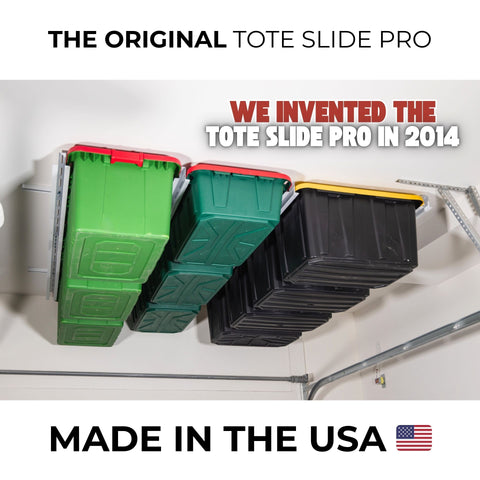
All three products are made in the USA from materials suited to garage and basement environments, where temperature swings, humidity, and occasional impact are common.
Design philosophy:
Grip and guide common tote rims securely
Distribute weight directly into ceiling joists or trusses
Allow smooth sliding action for easy loading and unloading
Modular construction enables expansion in 4–8 foot runs to fit different room sizes
Tote Slide: Core Ceiling Tote Rack for Everyday Storage
The Tote Slide serves as the foundational ceiling track designed for standard household totes. If you own 18–27 gallon bins commonly sold at Home Depot, Lowe’s, or Costco since the early 2000s, this system is engineered to fit them.
Construction concept: Heavy-duty steel or aluminum channels mount perpendicular to ceiling joists. The spacing between rails is tailored to engage the tote’s side lips securely, preventing wobble or accidental dislodging.
Typical use cases:
Labeled totes of holiday decorations stored overhead year-round
Sports equipment and camping gear kept accessible but out of the way
Excess pantry goods or bulk purchases organized above the garage
Seasonal clothing rotations for growing families
How the sliding action works: The user lifts a tote slightly, aligns its lip with the front of the rails, and pushes it back until the tote seats flush. Friction or built-in stops prevent the tote from sliding out accidentally when bumped.
Safety considerations:
Recommended per-tote weight ranges typically fall between 40–60 pounds
Even loading across multiple rails prevents stress concentration
Anchoring into solid wood studs rather than drywall alone is essential
Two screws per mounting bracket minimum ensures secure attachment
Tote Slide Pro: Upgraded Features for Heavy and Frequent Use
The Tote Slide Pro represents a more robust, pro-grade version of the standard Tote Slide. It’s intended for heavier storage loads, more frequent access, and environments where durability matters most.
Structural enhancements:
Thicker gauge metal construction
Reinforced mounting points for higher total loads
Additional support brackets to manage dynamic forces during sliding
Longer bearing surfaces for smoother operation
Who benefits most:
|
User Type |
Typical Contents |
Why Pro Version Helps |
|
Home workshop owners |
Dense hardware bins, power tools |
Higher weight capacity per tote |
|
Small trades businesses |
Electrical supplies, landscaping materials |
Frequent daily access |
|
Large families |
Heavy seasonal totes, bulk storage |
Long-term durability under load |
Functional differences from standard Tote Slide:
Smoother sliding with tighter tolerances
Better alignment aids for repeatedly inserting the same size tote
Increased resistance to racking or twisting over time
Support for loads approaching 80–100 pounds per tote in some configurations
Best practices:
Leave clear headroom under the rack for safe walking
Check fasteners annually for any loosening
Avoid mixing very heavy totes high overhead with light totes positioned lower
Maintain predictable, even loading across the entire structure
Bin Slide: Flexible Overhead Storage for Mixed Bins
While Tote Slide and Tote Slide Pro work best with consistent tote models, Bin Slide Ceiling Sam addresses a different challenge: mixed or non-standard containers. If your collection includes bins purchased over different years from Amazon, Etsy, Costco, or various home improvement stores, this system offers flexibility.
Design approach: Unlike tight-tolerance tracks made for one tote model, Bin Slide Ceiling Sam features adjustable spacing or multi-contact supports to safely hold different rim shapes and widths.
Ideal use cases:
Craft and hobby bins of varying sizes
Kids’ toy boxes accumulated over years
Household archive boxes transferred into mismatched plastic totes
Lighter items like seasonal bedding, decorations, or fabric storage
Flexibility vs. load capacity comparison:
|
Feature |
Tote Slide |
Tote Slide Pro |
Bin Slide Ceiling Sam |
|
Best for |
Standard totes |
Heavy/frequent use |
Mixed containers |
|
Load capacity |
Moderate |
High |
Light to moderate |
|
Tote consistency needed |
High |
High |
Low |
|
Adjustability |
Fixed |
Fixed |
Adjustable |
The system balances versatility and security—enough adjustability to handle varied bins while still preventing unintentional dislodging from bumps or minor house vibrations.
How the Overhead Tote Slide System Works in Practice
Consider a practical scenario: a 2-car garage built around 2005 with 16-inch-on-center ceiling joists, a 9-foot ceiling height, and a row of Tote Slide units installed along a side wall above the workbench area.
The load path:
Tote weight transfers into the rails
Rails transfer load into mounting brackets
Brackets distribute force directly into joists or trusses
No undue stress reaches drywall or light-gauge furring strips
User interaction workflow:
Labeling: Mark totes on two sides with contents and seasonal identifiers
Mapping: Create a simple plan noting which tote lives in which bay
Rotation method: Rarely used items go furthest back; seasonally accessed totes stay toward the front for easy access
Environmental benefits:
Totes remain above possible water intrusion on the floor
Gear stays away from road salt and grit tracked in by vehicles
Storage stays out of reach of pets or small children
Dust accumulation decreases compared to floor-level shelving
Planning Your Storage Tote Rack Layout
Before purchasing or installing any ceiling system, invest time in planning. A tape measure, simple sketch on paper, and honest assessment of your stuff will prevent costly mistakes.
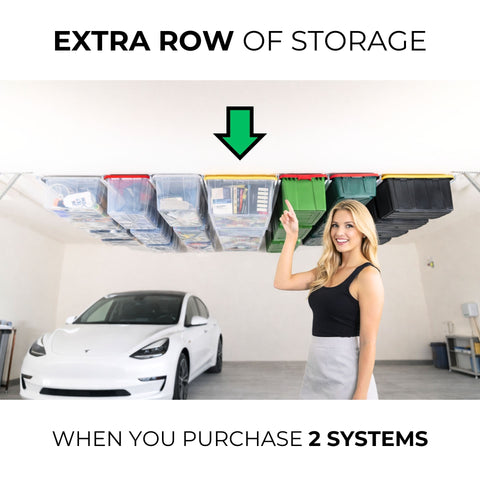
Key measurements to capture:
Ceiling height (8, 9, or 10 feet typical in residential construction)
Joist spacing (16 or 24 inches on center in most homes)
Available length clear of lights, garage door tracks, and HVAC components
Tote dimensions (length, width, rim design) for your existing collection
Grouping strategy:
Organize 27 gallon totes for tools and camping gear in one row
Assign 18-gallon holiday totes to a separate section
Place frequently accessed bins in the most convenient positions
Reserve harder-to-reach spots for long-term storage
Clearance considerations:
Leave safe walking height under the lowest tote (minimum 6.5–7 feet)
Maintain access to attic hatches and ceiling-mounted lights
Preserve ladder access where needed for periodic retrieval
Account for garage door opener rails and tracks
Planning checklist:
[ ] Measure ceiling height at multiple points
[ ] Locate and mark joist positions
[ ] Inventory existing totes by size
[ ] Sketch proposed layout on paper
[ ] Verify clearance from garage door movement
[ ] Plan labeling system before installation
Made in the USA: Why Manufacturing Origin Matters
All Ceiling Sam overhead storage products—including Tote Slide, Tote Slide Pro, and Bin Slide Ceiling Sam—are manufactured in the United States. Understanding what this means from a practical standpoint helps contextualize the build quality.
Advantages of domestic manufacture:
Material sourcing control: Closer oversight of steel, aluminum, and hardware quality
Consistent specifications: Reliable metal thickness, weld quality, and surface finishes batch after batch
Shorter feedback loops: Design improvements reach production faster when manufacturing is local
Regulatory compliance: US manufacturing simplifies adherence to safety and materials standards
Long-term implications:
Garage and basement environments subject hardware to temperature swings, humidity, and occasional impact. Products manufactured under consistent quality standards tend to hold up better over years of use compared to those with variable production oversight.
Domestic manufacturing also supports skilled trades and fabrication communities while maintaining accountability for product performance.
FAQ
How much weight can an overhead tote rack safely hold?
Capacity depends on three primary factors: the specific Ceiling Sam product (Tote Slide, Tote Slide Pro, or Bin Slide Ceiling Sam), the strength and spacing of your ceiling joists or trusses, and the quality of fasteners used during installation. Always consult the product’s published per-tote and per-rail ratings. In practice, many overhead systems accommodate typical tote loads of 30–60 pounds per bin, with Tote Slide Pro handling heavier items. Apply a safety margin by staying below maximum recommended loads, especially in older homes or garages with uncertain beam conditions.
Do I need matching totes for the system to work correctly?
Racks like Tote Slide and Tote Slide Pro perform best with consistent tote models sharing the same rim profile and dimensions. This ensures predictable fit and smooth sliding behavior each time you access your storage. Bin Slide Ceiling Sam tolerates mixed bins and container styles better, but grouping similar containers together still improves stability. Consider measuring your existing totes and standardizing gradually over time for the most efficient overhead layout. Watch for rim variations between brands—even similarly-sized totes from different stores may have different lip designs.
Can overhead tote racks be used in basements and utility rooms, not just garages?
Ceiling-mounted tote systems work well in basements, utility rooms, and workshops as long as the ceiling structure can support the additional load and adequate headroom exists beneath the racks. Basements present specific considerations: humidity levels may affect metal hardware over time, proximity to ductwork or plumbing may limit placement options, and access to shutoff valves, electrical junction boxes, and service panels must remain unobstructed. Leave sufficient clearance for taller users and equipment that needs to pass through the space, such as dehumidifiers or laundry baskets.
What if my ceiling joists are not spaced 16 inches on center?
Many North American homes built after the 1970s use 16-inch or 24-inch on-center joist spacing, but renovations, older construction, or steel framing can create different patterns. Locate and measure your joist spacing accurately before purchasing any system. Consult installation guidance for Tote Slide, Tote Slide Pro, or Bin Slide Ceiling Sam to understand how rails can be aligned or adapted to your specific layout. In unusual configurations or ceilings finished with resilient channels, professional assistance ensures loads transfer safely into structural members rather than drywall alone.
Are overhead storage tote racks compatible with garage door tracks and openers?
Overhead racks can often be installed above or alongside garage door tracks, but only where sufficient clearance exists for the door to operate without interference. Measure the full range of door movement, including curves in the track and the position of the opener rail, before choosing locations for your system. Leave a buffer zone around moving hardware to account for slight track flexing and to simplify future maintenance on the door mechanism. Many homeowners successfully install tote racks along side walls or above the rear of the garage where door hardware doesn’t reach.
Questions about your garage? Real people, fast answers.
Call or text(480) 720-0593