

Ceiling Storage Elevators vs. Garage Shelving: The Ultimate Guide to Space Saving
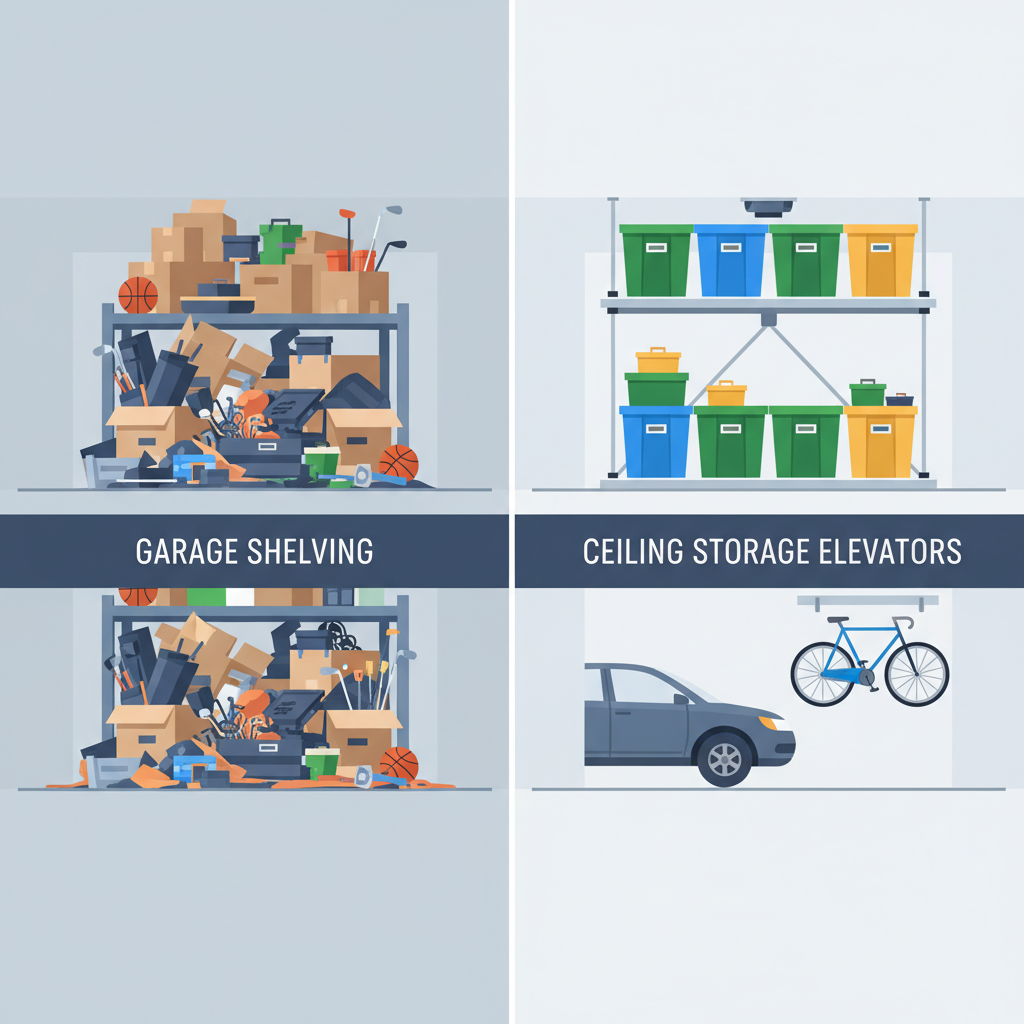
Introduction to Garage Organization Challenges
For most households, the garage is a parking spot, a workshop, and a catch‑all. Holiday totes, camping gear, sports equipment, and keepsakes crowd out vehicles and create tripping hazards. Floor space vanishes first, then wall space fills, and what remains overhead is complicated by door tracks, openers, lighting, and low ceiling heights. The result: you either give up parking or juggle ladders to reach bins you rarely touch.
The core challenge is access. Traditional shelving makes items visible, but it consumes floor area and encourages stacks that creep into walking lanes. Ladders introduce real risk when lifting heavy containers from high shelves. Overhead storage systems reclaim dead space, but not all are equally safe or convenient when you need something quickly. A thoughtful garage ceiling storage comparison has to weigh capacity against ease of retrieval.
Constraints to consider before choosing garage organization solutions:
- Vehicle clearance: Measure with doors open and account for roof racks and hatch lift height.
- Ceiling conditions: Joist direction, spacing, and obstructions determine mounting locations and allowable loads.
- Item profile: Bulky, lightweight items (decor, coolers) suit overhead; heavy, frequently used tools belong lower.
- Frequency of access: Seasonal gear tolerates height; daily‑use items require swift, safe reach.
- Safety and code: Anchoring into structure, avoiding sprinkler heads, and maintaining egress paths matter.
Common pain points that drive homeowners to garage shelving alternatives include tipping concerns with top‑heavy racks, bins buried behind other bins, and the time tax of hauling a ladder for one box. Moisture and dirt near the floor also shorten the life of cardboard and fabric.
To declutter garage effectively and maximize garage space, match storage method to the job: high‑capacity solutions for seldom‑used items, quick‑access options for weekly gear, and overhead systems that eliminate ladder climbs when possible. The sections that follow will compare ceiling storage elevators with fixed shelving on installation, safety, capacity, and day‑to‑day usability.
What Are Ceiling Storage Elevators?
A ceiling storage elevator is an overhead platform that mounts to your joists and lowers to waist height so you can load and unload gear without climbing a ladder. It’s part of a broader category of overhead storage systems and gives you access like a drawer in the ceiling—then lifts the load back up, clearing floor space and car bays.
Typical components include:
- Rigid ceiling frame anchored into joists or rafters
- Lift platform sized for common totes and bins
- Hoist mechanism (manual crank or drill-assisted) to raise/lower smoothly
- Safety locks or pawls to hold the platform when stowed
- Straps or rails to secure cargo and prevent shifting
- Guides to keep the platform stable during travel
In practice, you lower the platform, load items at a comfortable height, then lift and lock it overhead. It’s a practical way to declutter garage effectively, especially for bulky, light-to-medium items you don’t need daily: holiday décor, camping gear, coolers, kid keepsakes, luggage, or seasonal sports totes. For bikes, dedicated bicycle storage solutions keep frames safe and accessible without using the elevator space.
When weighing a garage ceiling storage comparison, elevators stand out from wall shelves and fixed racks in two ways:
- Ground-level access: No ladders or risky overhead lifting.
- Flexible use of dead space: Store above garage doors or vehicles while maximizing garage space on the floor and walls.
Installation focuses on structure and clearance. Elevators must tie into solid framing, avoid garage door travel and opener rails, and leave room for lighting or sprinklers. Ceiling height and door swing determine platform size and drop length. Many homeowners prefer simple, non-motorized hoists for reliability; drill-assisted options offer speed without complex electronics.
As garage shelving alternatives, ceiling storage elevators provide clean lines, easy access, and American-made durability when sourced from quality-focused providers—making them a smart anchor for comprehensive garage organization solutions.
Exploring Traditional Garage Shelving
Traditional shelving remains a go-to for many garages because it’s familiar, affordable, and widely available. In a garage ceiling storage comparison, it serves as the baseline for capacity, access, and footprint.
Common types you’ll see:
- Freestanding metal racks: 18–24 inches deep, 4–6 feet wide, 72–84 inches tall. Load ratings vary widely, from 150–800+ lbs per shelf when weight is evenly distributed. Always anchor to wall studs to prevent tip-over, especially on uneven slabs.
- Wall-mounted shelves: Typically 12–20 inches deep. Capacity depends on bracket design and how well they’re fastened into studs (not just drywall). Expect 100–300 lbs per shelf pair within manufacturer limits.
- Cabinet systems: Provide dust protection and a clean look. They consume floor space like racks and often require professional installation for heavy-duty units.
Where shelving works well:
- High-frequency items at waist-to-shoulder height: cleaning supplies, hand tools, pet food, and project bins.
- Clear visibility and quick access for daily use.
- Budget-conscious garage organization solutions; a sturdy rack runs roughly $120–$400, plus bins.
Tradeoffs to consider:

- Floor space: A single 24-inch-deep rack along a side wall can narrow vehicle door swing and reduce a safe 36-inch walking aisle.
- Access: Top shelves usually need a step stool or ladder. That’s manageable for light items, but awkward and risky with heavy totes.
- Safety: Overloading, poor anchoring, and uneven weight can cause failure. In seismic zones, bracing is strongly recommended.
- Dust and moisture: Open shelves collect dust; bottom shelves can wick moisture if the slab gets damp.
- Fit for bulky gear: Coolers, seasonal décor totes, and long items often overhang or require multiple shelves.
If your goal is maximizing garage space and to declutter garage effectively, shelving is best for items you use weekly and can safely lift at chest height. For infrequent, heavy, or bulky storage—especially above vehicles—overhead storage systems and garage shelving alternatives like ceiling-mounted platforms or elevators reduce floor clutter and limit ladder time, complementing shelves rather than replacing them.
Space Maximization: Elevators vs. Shelving
When the goal is to maximize every cubic foot, a garage ceiling storage comparison comes down to how each option uses volume and preserves floor area. Shelving concentrates storage along the walls. Ceiling-mounted elevators reclaim the “dead zone” above vehicles and door tracks.
Consider a typical 20 ft x 22 ft two-car garage. A single wall of 2 ft–deep shelving, 20 ft long and 6 ft high, holds roughly 240 cubic ft. But it permanently consumes about 40 sq ft of floor space and needs a 30–36 in aisle to access bins safely. That aisle is rarely free when cars are parked, so items end up stranded.
A 4 ft x 8 ft ceiling elevator platform, stacked 24–36 in high with totes, provides roughly 64–96 cubic ft with zero permanent floor loss. Two platforms yield up to 192 cubic ft, positioned over the hood lines or above the garage door travel where cars never occupy space. Access is temporary: lower the platform to waist height, load or unload, and return it overhead—no ladders, no dedicated aisle.
Key space factors in this garage organization solution:
- Floor footprint: Shelving removes 40+ sq ft per wall run; elevators remove none.
- Access footprint: Shelving requires permanent aisle space; elevators require temporary clearance beneath the platform during use.
- Wall utility: Shelving blocks wall real estate needed for a workbench, power tools, or yard gear; overhead storage systems keep walls open.
- Vertical density: Elevators encourage tight tote stacking because items come down to you, helping declutter garage effectively without risky climbs.
- Vehicle clearance: Properly planned platforms fit above hoods or between joists, maintaining door swing and mirror clearance.
For items like seasonal décor, camping bins, or spare tires, elevators excel at maximizing garage space. Bikes can go on dedicated ceiling lifts or wall forks, keeping tires off the floor and pathways clear. For homeowners seeking garage shelving alternatives that prioritize open floors and easy access—without complex motors—ceiling elevators deliver efficient, repeatable storage capacity.
Accessibility, Safety, and Convenience
When it comes to a garage ceiling storage comparison, accessibility is where ceiling-mounted elevators stand out. A lift brings the entire platform down to waist height, so you can load totes, coolers, or seasonal gear without a ladder. That means one person can rotate items safely and quickly. Traditional wall or freestanding shelves require reaching overhead or climbing, and the deeper the shelf, the harder it is to see and retrieve what’s in the back.
Safety improves when you eliminate ladders and unstable step stools. Quality overhead storage systems anchor into ceiling joists and use rated hardware; elevators add mechanical locks that hold the platform in place during loading and after it’s raised. Freestanding shelves can rack or tip if overloaded, and wall shelves concentrate weight in a small area if not properly anchored. With ceiling solutions, weight is distributed across structure, floor hazards are reduced, and you keep walking paths clear.
Convenience shows up in daily use:
- Faster swap-outs: Lower the platform, swap bins, and raise it—no re-stacking or climbing.
- Better visibility: Ground-level loading encourages clear labeling and keeps inventory obvious.
- Cleaner floors: More open floor area makes sweeping, parking, and kid-bike traffic simpler.
- Fewer workarounds: No moving cars or ladders to reach the top shelf.
Consider typical scenarios. Storing a snowblower chute, camping totes, and a heavy cooler? An elevator lets you handle bulky items at ground level. Bicycles that clutter walls? Dedicated bike hoists or ceiling tracks free wall space and keep handlebars from snagging vehicles. Seasonal decor accessed a few times a year? Hard-mounted ceiling platforms are a dependable, low-touch solution.
For homeowners focused on maximizing garage space and wanting garage shelving alternatives that declutter garage effectively, non-motorized, American-made lifts offer reliability without batteries, remotes, or maintenance-intensive parts. As part of comprehensive garage organization solutions, a mix of elevators for frequent-access items and fixed racks for long-term storage delivers the best balance of safety, accessibility, and everyday convenience.
Durability and Long-Term Value
In a garage ceiling storage comparison, durability hinges on more than a published weight rating. Materials, hardware, how loads are transferred into the structure, and the number of failure points all shape long-term value.
Well-built overhead storage systems—whether fixed racks or elevators—typically use welded, powder‑coated steel in 12–14 gauge with zinc‑plated fasteners. When secured with lag screws into ceiling joists or trusses, they distribute weight across multiple framing members. A 4x8 rack rated for 500–600 lb, for example, commonly ties into four or more joists at 16" on center, minimizing point loads and reducing flex. By contrast, freestanding or wall‑mounted shelves often rely on thinner uprights, particleboard, or resin components that can sag in heat and humidity, and wall versions are only as strong as their anchors and stud engagement.
Environment matters. Garages see temperature swings, moisture, and road salt. Overhead solutions keep storage above splash zones and away from pests, while powder coating resists corrosion far better than raw steel or MDF shelving. In seismic areas or busy garages, ceiling systems bolted into framing are less prone to tip compared with tall shelves that can rock when bumped by a vehicle.

Moving parts deserve scrutiny. Mechanical elevators with steel cables, pulleys, and positive locks reduce complexity and maintenance versus fully motorized units. Cables should be rated well above working loads and inspected annually. Shelving uses plastic clips and adjustable brackets that can fatigue over time, especially under heavy bins.
Long-term value shows up in total cost of ownership:
- Replacement cycles: quality overhead systems routinely exceed 10 years; low-cost shelving may need periodic replacement.
- Safety and access: lifting platforms reduce ladder trips and accidental drops.
- Floor space reclaimed: easier to maximize garage space and declutter garage effectively.
- Resale appeal: tidy, open floors and organized zones help buyers see potential.
- Flexibility: adjustable platforms or modular racks adapt as garage organization solutions evolve.
Simple upkeep preserves lifespan:
- Torque-check all lag bolts yearly; retighten as wood dries.
- Inspect cables, pulleys, and locks; replace any frayed lines immediately.
- Wipe salt and moisture; touch up powder coat if scratched.
- Keep loads within rated capacity and evenly distributed.
Installation Complexity and Flexibility
In a garage ceiling storage comparison, installation requirements vary widely—and so does day‑to‑day flexibility.
Ceiling storage elevators attach to joists and move vertically to meet you at waist height. Because there’s no wall bracing and, with non‑motorized designs, no wiring, the process is straightforward but precise. Expect to locate joists (typically 16 or 24 inches on center), mark a square footprint, and fasten with rated lag screws. Two people, a level, and an impact driver are highly recommended. Most quality elevators install in 3–4 hours for a first‑time DIYer, primarily due to careful layout and safety checks. The payoff is daily convenience: you lower the platform to load totes, sports gear, or seasonal décor, then raise it clear of vehicles and door tracks without climbing a ladder.
Hard‑mounted overhead storage systems are simpler to assemble but fixed in place. You’ll pre‑build the frame, span joists with brackets, and set a drop height that won’t interfere with the garage door, opener rail, or lighting. Install time is typically 2–3 hours, depending on joist alignment and ceiling finish. They’re sturdy garage organization solutions, but once set, changing height or location means full uninstallation.
Traditional garage shelving alternatives split into wall‑mounted and freestanding units. Wall shelving is quick to hang if studs are accessible, but drywall garages may need track systems and blocking. Freestanding racks require minimal tools yet consume valuable floor space, making it harder to maximize garage space and maneuver vehicles or lawn equipment.
Real‑world example: In a 9‑foot ceiling bay above an SUV, a 4×6 elevator can lower to 36 inches for safe loading and then park at 90 inches to clear the hatch. A fixed rack set at 20–24 inches of drop might conflict with the tailgate or garage door radius.
Who should DIY vs. hire:
- DIY: Comfortable finding joists, using lag fasteners, and following load‑rating specs.
- Hire a pro: Truss‑type ceilings, atypical joist spacing, or tight clearances around openers and lights.
For homeowners looking to declutter garage effectively, elevators offer the most day‑to‑day flexibility among overhead storage systems, while hard‑mounted racks deliver set‑and‑forget strength.
Cost Analysis and Return on Investment
A smart garage ceiling storage comparison looks beyond sticker price to total cost of ownership: purchase, installation, maintenance, lifespan, and the value of space you reclaim.
Hard‑mounted overhead storage systems typically run lower upfront—often a few hundred dollars per rack depending on size and load rating—plus installation. They excel for seldom‑used bins and seasonal gear. Ceiling storage elevators cost more initially—commonly several times a fixed rack—because they add safe, ground‑level access. However, they reduce ladder dependence, speed up retrieval, and get used more often, which compounds their return.
Where ROI shows up:
- Replace off‑site storage: Local unit rentals can easily reach significant monthly fees. Reclaiming 60–120 sq ft overhead can eliminate a unit, covering an elevator’s cost in a year or two and a fixed rack even sooner.
- Park both cars inside: Freeing floor space protects vehicles and equipment from bumps and moisture, reducing incidental damage and replacement costs.
- Time and safety: Ground‑level loading helps declutter garage effectively without ladders, lowering injury risk and making weekly access fast.
- Longevity: American‑made, heavy‑gauge steel and quality fasteners extend service life and minimize maintenance—key for quality‑minded homeowners.
Concrete example: A household paying for extra storage cancels the unit after installing an elevator for totes and a dedicated bicycle storage solution overhead. The monthly savings offset the higher elevator cost quickly, while bikes move off the floor without wall scuffs. If your items are truly static, hard‑mounted racks offer the best dollar‑per‑cubic‑foot value among garage shelving alternatives.

Installation costs vary by ceiling height, joist layout, and load. Non‑motorized elevators reduce complexity and long‑term upkeep. For frequent access—sports gear, camping kits, holiday decor—an elevator’s convenience increases usage and payback. For bulk, rarely touched items, fixed racks deliver maximum capacity per dollar.
As part of comprehensive garage organization solutions focused on maximizing garage space, pairing a ceiling storage elevator with select hard‑mounted racks creates a balanced, high‑ROI system.
Who Benefits Most From Each System?
Choosing between ceiling storage elevators and garage shelving comes down to how you use your space, how often you access items, and your tolerance for ladders. In a garage ceiling storage comparison, start by mapping what you store and how frequently you reach for it.
Who benefits from ceiling storage elevators
- Homeowners wanting ladder-free access. Ideal for aging-in-place, safety-conscious families, and anyone uncomfortable climbing with bins.
- Seasonal and bulky items. Holiday décor, camping totes, car-top carriers, coolers, and off-season sports gear move up and down in one trip.
- Tight garages that need floor clearance. Elevators lift storage above vehicles and work zones, maximizing garage space without wall clutter.
- Quality-focused buyers who value American-made craftsmanship and simple, reliable mechanisms over complex electronics.
Who benefits from hard-mounted overhead storage systems
- Planners with predictable, low-touch storage. Labeled totes of keepsakes, archives, spare luggage, and rarely used tools can live overhead.
- DIYers comfortable with ladders. If you don’t mind occasional ladder use, fixed racks offer high capacity at a great value.
- Households short on wall space. Overhead racks keep bicycles, bins, and long items off the floor and walls.
Who benefits from floor-based shelving
- Frequent grab-and-go storage. Daily-use cleaners, pet supplies, small tool cases, and pantry overflow belong at eye level.
- Renters or short-term solutions. Shelving installs quickly and moves with you, but it consumes floor space and can limit parking.
Smart combinations that declutter the garage effectively
- Use an elevator for heavy or seasonal bins you don’t want to carry up a ladder.
- Reserve fixed overhead racks for set-and-forget categories.
- Keep a small shelving bay for weekly items near the door.
- Add bicycle storage solutions overhead to free floor space.
For many quality-minded homeowners, these garage shelving alternatives work best together, delivering balanced, durable garage organization solutions tailored to real-life routines.
Making the Best Storage Decision
Start with a clear garage ceiling storage comparison: match the storage method to what you store, how often you need it, and your ceiling’s structure. A balanced plan usually mixes elevators for frequent-access bins, fixed overhead storage systems for long-term items, and a few shelves for everyday supplies.
Key factors to weigh
- Access frequency: If you reach totes weekly (sports gear, bulk paper goods), a ceiling storage elevator that lowers to you removes ladders and saves time. Seasonal décor or camping gear that moves twice a year fits well on hard-mounted overhead racks.
- Safety and mobility: Ladders are a top garage injury source. Households with kids, taller vehicles, or aging-in-place needs benefit from lift-down platforms and bicycle hoists that keep aisles clear.
- Structure and fit: Note ceiling height (9–12 ft is ideal), joist direction/spacing, opener rails, and garage-door travel. Choose systems that anchor to joists, not drywall, and maintain car-door clearance.
- Weight and capacity: Tally real loads—four 27-gal totes can exceed 200 lb. Verify rated capacities, safety factors, and cable/fastener specs. For elevators, consider dynamic load ratings, not just static.
- Budget and lifetime value: Shelving is inexpensive but occupies floor area. Overhead solutions reclaim square footage, cut clutter, and reduce ladder risks. Manual lifts avoid motor maintenance and wiring, keeping ownership costs predictable.
- Organization detail: Standardize totes, label fronts, and group by season. Add bike lifts or tracks to remove wall clutter and keep tires off concrete.
Practical scenarios
- 2-car, 10-ft ceiling: Elevator for weekly-used totes; 4x8 hard-mounted rack above the garage door for holiday bins; small wall shelf for cleaners.
- Active cyclists: Ceiling bike storage for 3–5 bikes plus a narrow floor rack for quick swaps.
- Tool-heavy hobbyist: Fixed overhead platforms for seldom-used tools; elevator for medium-weight fixtures; minimal floor shelving.
Bottom line: To maximize garage space and declutter garage effectively, use elevators for frequent, safe access; fixed overhead storage for volume; and shelving as a targeted complement. This mix delivers durable, American-made quality options among today’s garage organization solutions and garage shelving alternatives.
Call to Action
Ready to get organized? Explore our American-made storage solutions and see what fits your garage best.
Questions about your garage? Real people, fast answers.
Call or text(480) 720-0593